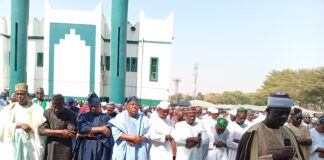





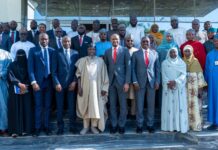
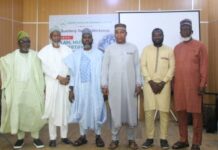







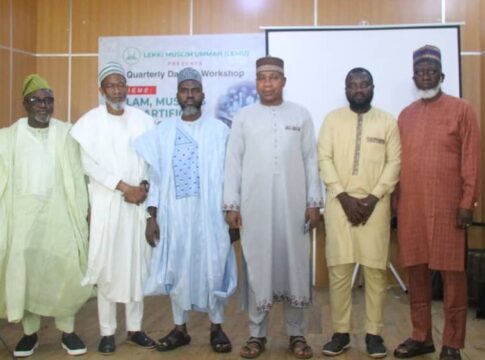
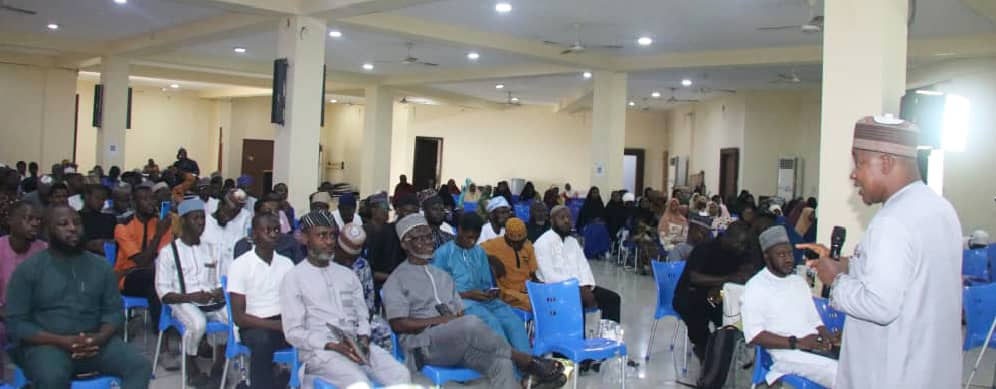
Like A storm gathering over a digital horizon, the specter of data colonialism loomed large at the Lekki Muslim Ummah (LEMU) fourth quarterly Da’wah Workshop for 2025. At the Vice Admiral Jubrila Ayinla Multipurpose Hall, scholars, professionals, AI experts, and students from Yaba College of Technology, Lagos State University, University of Lagos, and Olabisi Onabanjo University gathered under the theme: Islam, Muslims and Artificial Intelligence.
The words of Ustadh Hussain Hyacinth, Director at the Voice of Nigeria, who painted a vivid picture of how human beings are being reduced to mere instruments in the machinery of data exploitation. His
“A few powerful big tech companies have access to your data. You supply vital information about your behavior, location, photos, messages and clicks. This is data colonialism. They benefit the most, making money from targeted advertising, surveillance, and digital control.”
Hyacinth cautioned that Muslims must reflect deeply on the implications:
“For Muslims, have we ever imagined sensitive information and sources of legislation of Islam being in the possession and control of enemies of Islam?”
He explained that whoever controls the storage of data controls its narrative, warning that billions are now made not from land or agriculture, but from the trafficking of human information. “Before, people made their money in real estate and agriculture, but now, billions of dollars are made through trafficking information,” he said.
Prospects and Problems of AI
The workshop, chaired by Imam Nojeem Jimoh, Chief Imam of Lighthouse Mosque, Lekki, and National Amir of The Companion, also featured a presentation by Prof. Musa Aibinu, Vice Chancellor of Summit University, Offa, delivered on his behalf by software engineer Sodiq Akanmu.
Prof. Aibinu described AI as a product of human creativity, permissible in Islam when used responsibly. He highlighted its potential to enrich religious practice: Automated tajweed correction tools
Smart qiblah locators; Accurate prayer time calculators; Digital Qur’an memorisation assistants among others.
He also pointed to AI’s benefits in Islamic finance, transportation, agriculture, healthcare, and governance. “Muslims can utilise AI-powered chat systems to verify information about Islam and gain access to vast digital libraries of Islamic texts,” he noted.
Yet, his optimism was tempered with caution. He warned of job losses, misinformation, privacy breaches, and overreliance on machines.
“Do not use Artificial Intelligence to create misleading or fake messages. We should also respect Islamic rules on protecting the dignity and privacy of individuals. AI should assist, not replace human judgement. Importantly, Muslims must not allow technology to distract them from prayer, worship, and moral duties.”
Smartphones: Between Goodness and Villainy
The Chief Imam of Lekki Central Mosque, Dr Ridwan Jamiu, delivered a sobering lecture on smartphones, describing them as double-edged swords.
“Virtually everyone uses a smartphone. Some for good, others for harmful purposes. Unfortunately, smartphones have ruined individuals and even entire communities through the spread of false information. They have been used to incite communal clashes and trigger civil unrest in various places.”
He urged Muslims to embrace Islamic ethics in phone and social media use, warning against excessive time online:
“Social media is a place to visit, not a place to stay. The longer you stay, the more adverse the effects are.”
Closing Notes
In his closing remarks, Imam Nojeem Jimoh commended LEMU for organising a timely and impactful workshop. He praised the facilitators for their clarity and simplicity, noting that such knowledge-sharing is vital for Muslims navigating the age of AI.
The National Amir of The Companion acknowledged the dual nature of AI: its risks of misinformation, privacy breaches, and over-reliance, but also its vast potential to benefit humanity — including Muslims.
The workshop was not merely a dialogue on technology, but a clarion call. Between the promise of innovation and the peril of exploitation, the voices at Lekki urged Muslims to wield AI as a tool of faith, not a weapon of manipulation.